
David BRAITHWAITE
QUESTIONS have been asked about where the proposed Fingerboards mineral sands mine will source water.
Mine proponent Gippsland Critical Minerals (GCM) has submitted an environment effects statement self-referral to Planning Minister Sonya Kilkenny, but opponents claim the company has not finalised water availability.
Opponents believe “many ill-considered possibilities” for obtaining water have been proposed in the referral.
However, GCM told the Gippsland Farmer detailed water sourcing strategies will be assessed through the self-referral process.
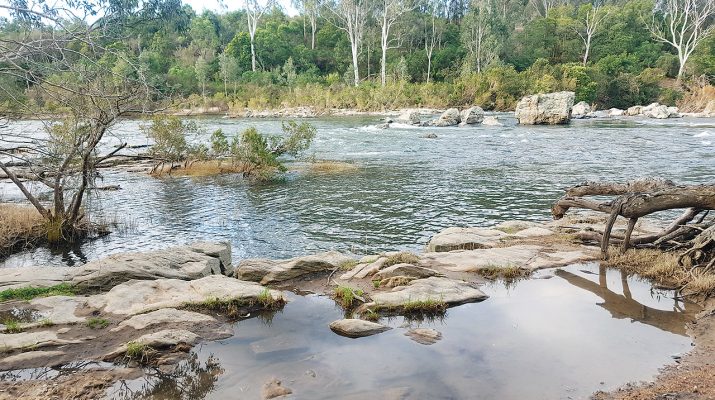
There are concerns water from the Macalister River system is an option, with opponents fearing water security could be at risk for irrigators if water is taken from this fully-allocated system.
Another water source GCM is investigating is the Latrobe Group Aquifer. A large bore field is planned, with some farmers worried water from existing bores in the area could be compromised and available water will be restricted.
Accessing recycled water from East Gippsland Water’s waste water facilities at Paynesville and Bairnsdale is another possibility put forward by GCM. Use of this recycled water at the Fingerboards location, opponents claim, could have inherent problems associated with contamination; such as pharmaceuticals, heavy metals, industrial waste, hormones, antibiotics and PFAS.
Recycled water from both of these treatment plants would require the construction of a pipeline about 30 kilometres in length across both public and private land, with a series of pumps required for water to reach the elevated Fingerboards site.
Water recovery and recycling from dewatering of tailings is also being considered as a water source. GCM is planning to construct a large two-gigalitre dam which it claims will have benefits for growers in the Lindenow Valley, drought-proofing farms. Opponents believe the water in the holding dam will be required for the life of the mine, with irrigators having to wait at least 22 years before mining and rehabilitation are completed.
A spokesperson for Mine Free Glenaladale said that as more information begins to be revealed about this proposal it highlights that it “will not only affect those landholders within close proximity to the proposed mine”.
“It now appears it could have lasting repercussions across both East Gippsland and Wellington shires, with large scale infrastructure corridors needed, and possible costs to the ratepayers for this infrastructure,” the spokesperson said.
“With these latest revelations coming to light in the referral, it is obvious GCM has failed to adequately consult with the wider community or inform them of possible impacts.”
“There is still wide spread opposition to the mine, and the community is left wondering what other unpleasant surprises might be in store in the future as this project develops.”
The company was at the beginning of the formal approvals pathway, with the self-referral currently under consideration by the Planning Minister.
“Detailed water sourcing strategies will be assessed through that process, including hydrogeology studies, water modelling and environmental risk assessment,” the GCM spokesperson said.
“A range of potential sources are under consideration as part of that work. These include deep aquifers, regulated river systems in accordance with
water trading rules and recycled water.
“Recycled water is already safely and routinely used across East Gippsland. East Gippsland Water currently supplies recycled water for irrigation at the Bairnsdale and Paynesville golf courses, sporting fields, public open spaces and council-managed reserves. It is also used under approved reuse schemes for local agricultural irrigation, including pasture and fodder crops.
“Any future use would be subject to the same EPA Victoria standards and regulatory oversight that apply to existing schemes.
“As part of our work, GCM is actively considering how infrastructure investment associated with the project could deliver broader long-term regional benefits. This includes legacy site infrastructure such as a 2GL dam.
“It is important to be clear that any infrastructure required for the Fingerboards project would be funded by the project. Any suggestion that GCM would expect ratepayers to absorb those costs is false and misleading.”
Acknowledging the importance of water to the community, the GCM spoksperson said the company was taking the time to develop a detailed water sourcing strategy.
“Every water sourcing option will be assessed carefully and transparently through the regulatory process before any final decision is made. Ultimately, the project will be subject to assessment by multiple government departments and independent regulators,” the spokeperson said.
“If GCM cannot demonstrate that water can be sourced and managed safely, sustainably and in accordance with Victorian law, the project will not be approved.”
