
Katrina BRANDON
CONFLICTS in the Middle East are causing mayhem across the world.
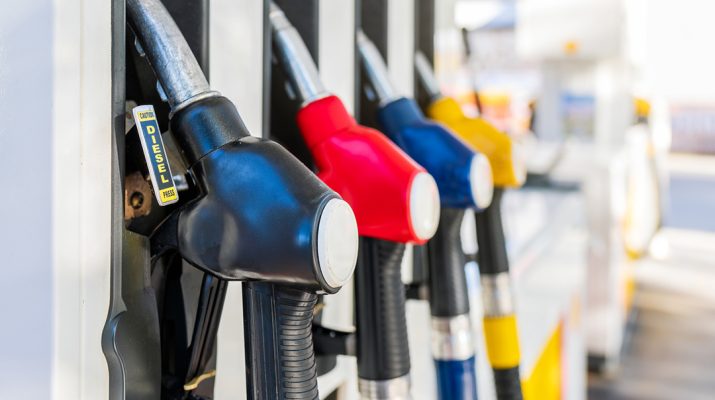
Fuel shortages are affecting communities locally and nationally, with farmers taking a hit. Prices soared within a few days of the war, prompting people to panic-buy fuel and authorities and businesses to impose limits.
Newry dairy farmer Megan Grumley told the Gippsland Farmer that she was concerned about the impact it could have on Gippsland farmers.
“I am deeply concerned about the current situation surrounding petrol and diesel prices,” she said.
“Fuel is essential to daily farm operations, particularly to keep tractors running to feed livestock. Dairy farming operates 365 days a year, with cows milked twice daily, relying heavily on milk tankers that access the farm daily, staff who can reliably travel to work, and everyone else who supports dairy farm operations.
“Unfortunately, rising fuel and input costs have a clear flow-on effect, and businesses across the supply chain are often left with no choice but to pass these costs on.”
Sharing the concern, the Victorian Farmers Federation (VFF), Australian Dairy Farmers (ADF) and Nationals Member for Gippsland South, Danny O’Brien, have also called on state and federal governments to ensure fuel supply to regional areas.
“State and federal governments need to work with the major fuel companies to ensure regional Victoria is not left behind. Reports of supply restrictions are a huge concern, with farmers in particular waiting for deliveries. At the same time, transport companies and other essential services need fuel to keep our local economy ticking over,” Mr O’Brien said.
“Without farmers and truckies getting fuel, we’ll come to a pretty serious problem pretty quickly.
“People also need to be aware that panic-buying is counter-productive and driving the supply concerns – please only buy fuel if you need it.”
Highlighting another concern, Ms Grumley stated that amid rising costs, she sees potential risks to farm security. She said that with the recent rise in the theft of farming equipment, there is a strong fear that if petrol and diesel prices continue to rise, the risk of fuel-related theft may also increase.
Unfortunately, Ms Grumley’s fears came true on a farm in South Gippsland.
Call for more action on fuel supplies
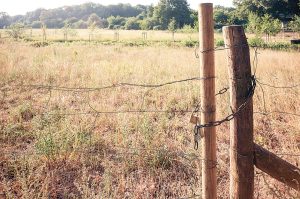
BETWEEN March 13 afternoon and March 15 morning, a farmer in Nyora had his tractor’s fuel tank drilled into. Having found the damage, the farmer took to social media to warn others about possible upcoming thefts.
“I know the cost of fuel is getting high, but this is getting out of hand. One of our tractors has had its tank drilled out and the fuel stolen!” The farmer wrote.
“It must have happened between 4pm Friday and Sunday morning when we moved the tractor out of the shed to feed cows, and it stalled. It was parked in the shed.
“I was working at this farm until 9pm Friday, and as I was closing the shed, a white dual-cab Holden Colorado Ute drove into the driveway, then reversed out and drove away slowly toward Lang Lang.
“Unsure if I disturbed them coming back to drain other tractors that were also parked at the farm. I locked the gates as I left. They remained locked until Sunday morning.
“Be careful where you park anything with diesel in it. They may even do it while you are out in the back paddock. Hopefully, they don’t drill your tank and just take the diesel.”
In response to the theft, the Federal Member for Monash, Mary Aldred, said she was appalled that it had come down to thievery.
“I was appalled by reports of a diesel theft at a Nyora property. The last thing our farmers need is to be the target of callous thieves,” she said.
A Victoria Police spokesperson said that the Victoria Police Farm Crime Unit and local police are closely engaged with the farming industry and continue to monitor any incidents of fuel theft at rural properties.
Yinnar dairy farmer Jason Lee told the Gippsland Farmer that, despite the conflict, suppliers have been good at maintaining connections with their clients.
“Suppliers so far have been good in maintaining product availability on both urea and diesel. They are typically honouring their long-term customers,” he said.
“Prices have adjusted slightly with a $300/t increase on urea and $0.7/L on diesel. Transport is the larger concern, provided they can keep getting fuel to keep moving. This is across the board for all farm inputs and outputs.”
Mr Lee said that so far, it is only a financial concern.
“When the reality hits, then we will react; it’s just speculation. Not panic buying. Business as usual on other expenses,” he said.
“We will keep weighing up options on whether to use urea or buy in fodder. The reality of the world is going to hit in June with the opening of milk prices; we are hoping it will hold. And hoping the war is part of history by then.”
The Federal Member for Gippsland, Darren Chester, said he understands the concerns coming through from regional farmers.
“Gippslanders are understandably concerned about any potential disruption to supply chains, particularly given how reliant our region is on fuel, fertiliser and other critical inputs sourced from overseas,” he said.
“Australia is a major food producer, and we can grow enough to feed ourselves, but the reality is that the inputs which underpin our agricultural sector, fuel, fertiliser and pesticides, depend heavily on international supply chains. When those supply chains are disrupted, the risk to our food security becomes very real.”
Mr Chester highlighted the need for a comprehensive National Food Security Strategy to support farmers and other essential services across the nation, and that the escalating conflict overseas driving up fuel costs and creating uncertainty around supply, adds another significant layer of pressure as they make decisions about planting and production.
Following the mass’s frustration, Mr Chester and Ms Aldred said that the government’s dismissal of the issue as “scaremongering” and its subsequent National Cabinet meeting in response were disappointing.
“Distribution is the critical issue right now. We are continuing to press the government to make sure farmers, as well as the fishing and forestry sectors, have reliable access to fuel supplies.
“If the government maintains there is enough fuel available, then the priority must be ensuring it reaches the communities and industries that depend on it most.”
Ms Aldred stated: “Farmers are struggling to source the diesel required for vital daily tasks, from feeding stock to crop production.
“One example is a Kongwak dairy farmer who, when his diesel delivery didn’t arrive, was forced to make repeated trips to a petrol station with jerry cans just to operate his diesel machinery to feed 800 cattle.
“But, when I stood up in Canberra to question why fuel wasn’t getting through to regional areas like Monash, the government claimed there was no problem. Days later, it was a national crisis.
“The government’s delayed response and mixed messaging have created uncertainty for all Australians, especially our farmers who require fuel to get food on our tables.”
