
Katrina BRANDON
PROMOTING Australian garlic, the South Gippsland Garlic Festival opened up for one day of all things garlic.
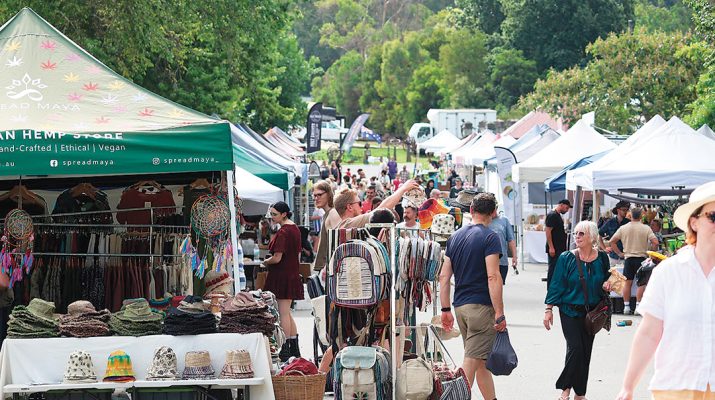
More than 4500 people attended the event at the Korumburra Showgrounds, featuring garlic growers from across the state, Gippsland-based businesses, chefs, performers and a featured event from the Garlic University.
Garlic has been grown in Australia for more than 200 years, arriving with early European settlers.
Currently, as people browse supermarket shelves, Chinese garlic is often found more readily than Australian garlic. Around 80 per cent of garlic sold in Australia is imported mainly from China and South America.
At the festival, it wasn’t just a celebration of garlic but an opportunity to share educational knowledge, whether it is from the paddock or for the plate.
Down the hill from the showgrounds, two buildings hosted garlic-themed information sessions: one featured Garlic University, and the other the “Festival Kitchen”.
The festival kitchen was hosted by award-winning food writer, author and radio personality Richard Cornish, who has written for The Age and The Sydney Morning Herald food sections for more than 25 years. Throughout, he has followed the journeys of regional and metropolitan businesses, becoming well known for discovering hidden talent and sharing it with the world.
During the Festival Kitchen, Mr Cornish welcomed head chef at Tsuko Japan’s Atsy Tanaka-Morrison from Korumburra, executive chef Trevor Perkins from Hogget Kitchen in Warragul, chef Michael Clark from Messmates Dining in Warragul, chef Francesco Laera from Trulli in Meeniyan, chef Alejandro Saravia from Farmers Daughters in Melbourne and Julie Weatherhead from Peppermint Ridge Farm in Tynong North.
Each chef talked about how they use garlic in their dishes and what special meaning it holds for them. All of the chefs prepared different dishes using garlic in various ways, the best way possible to express the flavour, and with love. In the kitchen, Mr Clark and Mr Laera conveyed love in their work, while Chef Saravia shared his love for cooking by bringing his two boys to spend time in the kitchen, showing it is a family effort, whether they are eating the food or helping along the way.
At the end of each session, attendees got to try the meals prepared by each chef, if they got in quick enough. The Festival Kitchen was one of the most popular stages for the day.
Walking through the event, local businesses from all around Gippsland were present. Some businesses included Pure Garlic (Gormandale), The Gay Farmer Candles (Callignee), Made by Kay (Morwell), Central Carrajung Estate, Maffco (Maffra), Flemming Berries (Korumburra), Grand Ridge Organics (Allambee South) and more.
Music filled the air amongst the chatter of people walking through the event, with The Burratones kicking off the event on the main stage. Following The Burratones were The Sand Brothers Duo (South Gippsland), Seth Stone & The Forge (South Gippsland), Mick Harrington (Heyfield), No Promises (South Gippsland) and El Rollo (Bass Coast).
From the experts selling garlic to the information-sharing stage, despite not being as popular as the other stages, many attendees jumped at the opportunity to ask questions to improve their chances of success in the garden.
Keeping a consistent attendance each year, author and organic gardener Penny Woodward from the Garlic Authority University stage, sharing wisdom from the garden in her book.
Local producers were also present on the education stage, such as Mirboo North’s Jackson Malley and David Jones, who both share their own businesses and have been a part of the festival since it was in Meeniyan. Mr Jones is the co-founder and former President of the Meeniyan Garlic Festival.
Both Mr Jones and Mr Malley spoke during the panel discussion session towards the end of the day.
Other experts present included Vele Civijovski, Belinda Lambert, Amanda Roffe, John Olliff, and Nick Young.
One key takeaway from the university stage is that garlic is really diverse. Garlic is not just garlic.
“There are probably 300 different varieties of golden cloves of garlic in Australia, and a lot of them are unique to Australia, because we can’t import seed garlic from overseas due to the disease problems,” Ms Woodward told the crowd.
“It’s really important that we understand how special our garlics are, and they fall into individual groups. So there are 12 groups, possibly 13, and each one of those, if you know what group your garlic variety is in, then you will know how long it takes to grow.”
Not only is knowing your garlic important, but knowing your soils can help with gardening garlic.
Variation in soil type, garlic type, garlic curing, and the amount of sunlight the garlic receives can affect its growth.
When starting her garlic journey, Ms Woodward said she didn’t realise that, while she didn’t have a particular problem with it, curing garlic is just as important as how you grow it. She said she had heard of many farmers losing their whole crop because they did not cure their garlic properly or because it was a particularly humid summer.
“All the growing information is really important, but once you’ve harvested it, what you do with it, then, is equally as important, because you can lose a whole crop to disease or to pests during that month to six weeks that you cured it. So make sure you get that right,” Ms Woodward said.
When growing garlic, Ms Woodward mentioned during the panel that the soil needs to be just right. She said that before planting garlic, you want to ensure there is a lot of movement and microbial activity in the soil.
She explained, “If you were starting six months ago, you could be adding manure. You could be adding a whole range of different things.
“If you’ve got worm farms, putting the worm juice and the leaves into it as well, and any really well-rotten manure you could put in now, but you can’t put fresh manure into it. So anything organic that you’re adding to it, you just need to keep adding and keep on adding.”
Before planting garlic, the panellists, Mr Jones in particular, said that you need to ensure the soil levels are right and that you should do a soil analysis beforehand.
“Be looking at doing a test of a problem in advance, then that would guide us over the 12 months beforehand, before planting, of what we needed to do to enhance the soil, what we would have when,” he said.
“It really gave us a starting point and a measure of what things we needed to amend and change in the soil.”
For more information on growing garlic, go to garlicaustralia.asn.au/australian-garlic
