
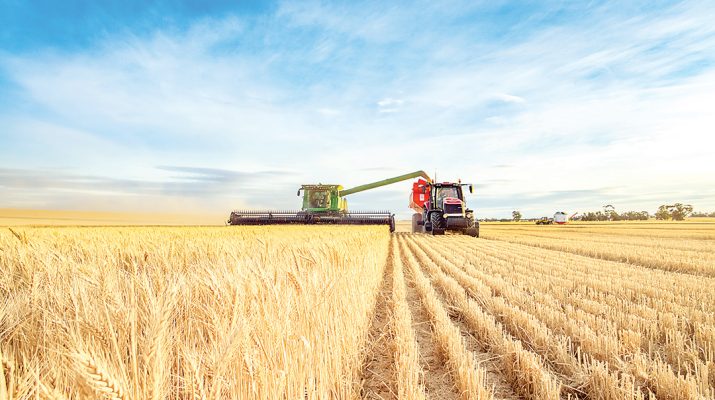
AUSTRALIA’S agricultural sector is leading the nation on productivity, showing how coordinated investment and innovation delivers economic strength in a more contested and uncertain world.
Minister for Agriculture, Fisheries and Forestry, Julie Collins MP said productivity in the agricultural sector is central to Australia’s economic performance and national security.
“Agriculture is not just keeping pace, it is setting the pace for the Australian economy.
“This performance is underpinned by a 35-year partnership between farmers, industry and the Commonwealth through the Rural Research and Development Corporations, turning shared investment into real productivity gains across farms, processing and supply chains, and strengthening Australia’s food security, trade and transition to net zero,” Minister Collins said.
Each year, Research and Development Corporations (RDCs) direct around $1.28 billion into applied research, development, extension and marketing through levies, Commonwealth investment and partner co-investment, with research showing approximately $8 return for every $1 invested.
Chair of the Council of Rural R&D Corporations, Troy Setter said the system is delivering practical results at scale.
“Australian agriculture has effectively reached $100 billion in agricultural production this year, despite rising costs, labour constraints and climate pressure.
“This is productivity in action. It’s happening now: stronger yields in grains, cotton using half the water per bale over 25 years, technology lifting efficiency in horticulture, and livestock cutting emissions intensity while growing output,” Mr Setter said.
“These gains flow through to jobs, stronger regional economies, more resilient supply chains and export earnings, especially when around 70 per cent of what we produce is sold into global markets.
“This globally unique RDC model is shaped by levy payers and delivers not just research and development, but marketing and market insights that convert production into value from farm right through the supply chain. It truly is a national asset.”
A new Collective Report from the Council of Rural R&D Corporations, released at ABARES, sets out how RDCs’ investment is lifting productivity through seven core drivers:
- Sustainability: lower inputs, less waste, more efficient systems that cut costs and lift performance;
- Emissions reduction: higher efficiency, lower intensity, stronger systems that cut emissions while lifting output;
- Biosecurity: faster diagnostics and stronger surveillance to contain risk before it compounds;
- Trade and market access: converting productivity into trust, value and influence in export markets;
- Technology and AI: productivity multipliers when adoption is coordinated and delivered at scale;
- Workforce capability: skills and leadership that ensure innovation delivers returns, and;
- First Nations engagement: strengthening stewardship, enterprise and resilience across Country.
Across the RDCs this year there are more than 4,400 active projects underway – including over 1,700 collaborative projects – reflecting the scale and coordination needed to tackle modern productivity challenges.
Mr Setter said long-run productivity growth has moderated to around 0.7 per cent per year.
Agriculture is still outperforming the rest of the economy, but the trend sharpens the task.
“The system works. The priority now is to drive the next wave of gains by scaling what works, accelerating adoption, and reducing fragmentation,” Mr Setter said.
“That is what the RDC model is built to do, and it’s why agriculture is leading Australia’s productivity push.
“It’s productivity for the national good,” Mr Setter said.
The Collective Research and Innovation Outcomes Report 2025, showcasing the theme of Productivity for the national good can be found at https://www.ruralrdc.com.au/resources/collective-research-and-innovation-outcomes-report-8bw4b
