
Erika Allen
ONCE a poultry enthusiast, always a poultry enthusiast.
That sentiment was on display as former exhibitors and prospective ones showed interest in the Gippsland Riviera Poultry and Game Club’s annual show in Maffra on Sunday, July 26.
Club president Luke Randle said one of the day’s highlights was not only the strong field of exhibitors, but the number of visitors eager to learn more about poultry breeding and showing.
“In the past we’ve had shows where it’s just been the exhibitors looking at the birds, whereas today we’ve had so many people coming to look at birds, looking to buy birds, looking to get into showing and just supporting the club, which has been really positive,” he told the Gippsland Farmer.
The annual show also marked the first major event since the poultry pavilion at the Maffra Showgrounds underwent a community-backed facelift.
For Mr Randle, the renovations were about more than fresh paint and new pens. They were a way of honouring the generations of exhibitors who built the club up since it was established in 1989.
“One of the ladies who mentored me as a kid doesn’t show or breed birds anymore, but she called in today and commended us on how well the shed looked,” he said.
“I think once you’ve got the passion it doesn’t go away whether you have birds or not.”
More than 500 meticulously prepared birds were exhibited across open and junior sections at the weekend.
The local club consistently punches above its weight at larger state and interstate competitions, according to Mr Randle. But it is under the roof of the Poultry Pavilion at the Maffra Showgrounds where the annual show reveals the club’s heart. Generations of breeders have shared their passion for the rural tradition here, which is being carried forward through the next crop of mentees.
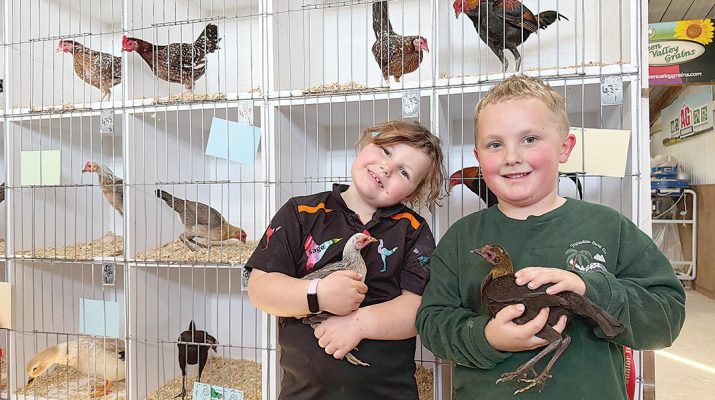
Thirteen-year-old Oliver Jones represents up-and-coming poultry exhibitors keeping the tradition alive. What began with a couple of chooks to exhibit at agricultural shows has become a five-year passion for the 13-year-old. He and his family now care for more than 100 birds and travel to shows across Victoria and interstate.
“My mum used to do horse shows, and I used to get bored, so she got me a couple of chooks to take to the Ag Shows and then three became 10 and more and more,” Oliver said.
He credits the people he has met along the way for keeping him coming back.
“Just the fun and the people you meet along the way that give you advice, and it’s just a great thing to do,” he said.
More than three decades after the Gippsland Riviera Poultry and Game Club was established, Mr Randle represents a bridge between generations of breeders, mentors and junior exhibitors. The same club that gave him his first opportunity to show birds is now the place where he finds himself helping the next generation discover the same passion.
He knows firsthand the impact a welcoming poultry club can have on a child. Joining as a junior himself, he remembers more experienced exhibitors sharing their knowledge, and even birds, with him to take home and build his flock.
“It meant so much to me as a kid being able to come here and show and get the feedback and camaraderie from these older guys and ladies that were showing at the time,” Mr Randle said.
“I get a lot of value out of helping kids do it because I know how much it meant to me when I was a kid.
“They get so excited, and they want to come back every time they win, and it kind of spurs you on.”
The club has experienced flourishing interest in the annual event, with the last two reaching entrant capacity.
“I think it’s probably the healthiest I’ve seen the club in a long time,” Mr Randle said.
“We probably had more entries than we did pens, so we turned some entries away.”
Preparing a champion bird is far more than a last-minute polish before judging day.
“It basically starts when you hatch the chicken,” Mr Randle said.
Breeders spend years carefully building their flocks before choosing which birds are worthy of the show pen.
For accredited poultry judge and breeder Ian Bush, the reward comes from breeding a quality bird rather than buying one.
While many exhibitors form close bonds with their birds, Mr Randle said there was a balance between treating them like pets and preparing them to perform naturally in the judging pen.
Oliver knows that balance well. His hand-raised Call duck, Bill, follows him around home, but he avoids making his show birds too tame.
“You want to get it so it stands up in the pen and makes sure it’s not real quiet and comes straight up to you for a cuddle. You would train them (ducks) lots but not so they’re really quiet.”
Presentation carries the most weight, and judges assess each exhibit against its breed standard, considering everything from feather quality and body type to eye colour, comb, legs and feet. They look for different characteristics depending on the breed.
Oliver explained this process using his junior champion waterfowl bantam, Sall – another silver Call duck.
Oliver said preparation includes washing his birds to bring out the shine in their feathers.
“I get a silk cloth to make their feathers bring out the shine, and the day before I wash them with soap, scrub their feet and get all the dirt under their nails out,” he said.
The club’s committee have aspirations to increase junior membership.
“We have a really strong committee at the moment who are really passionate about the poultry club doing well and showing off our club to the best of our abilities,” Mr Randle said.
“Everyone at our club breeds and shows birds to a really high standard and we’re all pretty proud of that, and we want to be able to reflect our home club as best we can.”
Oliver’s advice to anyone interested in exhibiting birds is simple: have a go.
“It doesn’t matter if you lose or don’t win anything; you’ll always likely get a card, it’s just having a go.
“You can bond with your chickens a lot, and I recommend little chooks for juniors that are easier to handle.”
