

Katrina BRANDON
OPENING the door to a new industry, iHemp Victoria held the annual Global Hemp Summit (GHS) last month at Lardner Park.
Over three days, hundreds of people travelled to Lardner Park to learn about the multiple opportunities hemp could bring, including agriculture, construction, and skincare/textiles to Gippsland.
Day one of the GHS was a practical session with iHemp Victoria president Darren Christie, who brought along soil microbiologist Norman Olsen and farmer Andrew Cavill, who started the trials at Lardner Park and opened the discussion for the next few days.
Attendees had ample opportunity to walk through the rows of hemp, which sparked questions and conversations about how it could become a leading industry.
After walking through the field, they stopped for a discussion and introduction to the topic and trials. They covered the failed trials, the successful trials, their product roadmap, and their plans.
A constructive discussion was held with providers and industry representatives, during which Mr Christie and Mr Olsen addressed concerns about hemp and provided background information on all aspects of the product.
During the session, the discussion highlighted agronomy, soil intelligence, genetics, uniformity, harvesting innovations, fibre processing capacity, construction applications (hempcrete, block systems, cavity walls), fire and building standards, and skincare/textiles.
On the second day, the Summit moved indoors, where speakers were ready to share their perspectives on the industry.
Speakers on the second and third days of the summit ranged from experts at the forefront of their fields to those just beginning their journeys, all discussing industries that could be impacted by hemp.
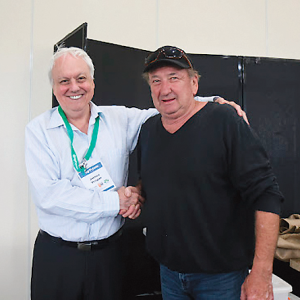
Leading the day, Mr Christie was joined by Kellie O’Callaghan, the chair of Regional Development Victoria, and James Vosper, the president of the NSW Industrial Hemp Association Inc., who MC’d the event
Ms O’Callaghan, former Latrobe City Council mayor, expressed her excitement about the potential industrial impacts on Gippsland, such as bringing another industry to Gippsland, which has seen the loss of two industries and trying to transition both, improving the agricultural sector, shaping the future of construction and encouraging more to explore industry literacy.
After Ms O’Callaghan, most speakers on day two of the Summit focused on key topics, including the construction industry, hemp research, and the benefits of hemp-based materials.
Key construction benefits highlighted during the day included hemp providing insulation in homes, as well as fire-, moisture-, and pest-resistance. While those present discussed whether or not it was “pest-resistant” or not, with some saying that while some termites won’t go for hemp blocks, there have been some cases where they have.
Other key aspects of the day included Dr Hemp and Anthony Karalaris stepping in to discuss the historical elements of hemp across countries, helping the idea resonate with conference attendees, and highlighting Dr Hemp’s history with hemp.
From the other side of the world, additional speakers presented examples from France and India, discussing potential international connections and partnerships to ensure hemp is used as productively and beneficially as possible, and how it could be done locally.
On the final day of the summit, the final notes on hemp covered the current state and future potential of the hemp industry in Gippsland and across Australia, highlighting collaborative efforts, industry challenges, and opportunities in both agriculture and sustainable construction.
Education on hemp was also highlighted, talking about getting local farmers involved from Orbost all the way to the South Gippsland areas, whether they are dairy, meat or crop farmers, to take the opportunity to hear how it could benefit their farms, and take part in transforming the timber industry.
The Summit wasn’t just about hemp; it was about collaboration among people and clusters. Gippsland professor Mirijana Prica and Dr Nicola Watts highlighted the importance of connections, creating a shared space to spread knowledge and invest in people, which, in the broader context, drives societal growth.
Others, such as Western Sydney University’s Maggie Davidson, broke down the science behind the products, with Dr Davidson highlighting potential risks and examining the ramifications of hemp in construction, using silica as an example.
Each speaker brought their all on the importance of hemp to not just the region, but the world, with industry breakdowns, transitioning into sustainable and energy efficiency, and why the choice is ultimately hemp.
For more on the Global Hemp Summit, keep an eye out in the later months of Gippsland Farmer.
