
Katrina BRANDON
AUSTRALIAN agricultural leaders state that the farming sector has been “hung out to dry” in an agreement between Australia and the European Union (EU).
The Victorian Farmers Federation (VFF), Australian Dairy Industry Council (ADIC) and the Red Meat Advisory Council (RMAC) have shared their disappointment.
VFF President Brett Hosking said it was clear the EU and Australia’s competitors had run rings around our negotiating team, with no improvement secured on the deal Australia rejected three years ago.
“It’s pretty embarrassing. For farmers, no deal would have been better than what we’ve been dealt,” he said.
“At a time when farmers are getting smashed by devastating water buybacks and skyrocketing fuel and fertiliser costs, we’ve been hung out to dry for the sake of getting the deal done.”
Mr Hosking said the deal could negatively impact many local farmers.
“Australian agriculture is a net exporter, and the market access numbers simply don’t stack up,” he said.
“Beef access is a third of what the industry was seeking, and for sheep meat, New Zealand got five times more. This puts us at the back of the pack going forward and at a disadvantage.
“For our dairy farmers, it’s largely a one-way deal. The EU already exports $980 million in dairy products to Australia, with only $29 million coming back. It’s a hard pill to swallow for the country’s largest dairy-producing state.
“Consumers could also be set to pay more at the checkout for dairy. This move slugs Aussie brands with harmful geographical indicators that will confuse Australian shoppers and cost them more.”
Independent Chair of RMAC John McKillop said the government’s failure to support the red meat industry in trade comes at a time when it is pursuing cost increases for the industry, placing further financial pressure on the sector.
“The draft Cost Recovery Implementation Statements issued by the Department of Agriculture, Fisheries and Forestry (DAFF) would impose increasingly unsustainable costs on Australian agricultural exporters, undermining competitiveness in global markets,” he said.
“At a time of global instability, exporters are already competing against heavily subsidised international rivals with lower or no export fees, yet the Government is adding further cost burdens instead of genuinely supporting productivity, export growth and market access.”
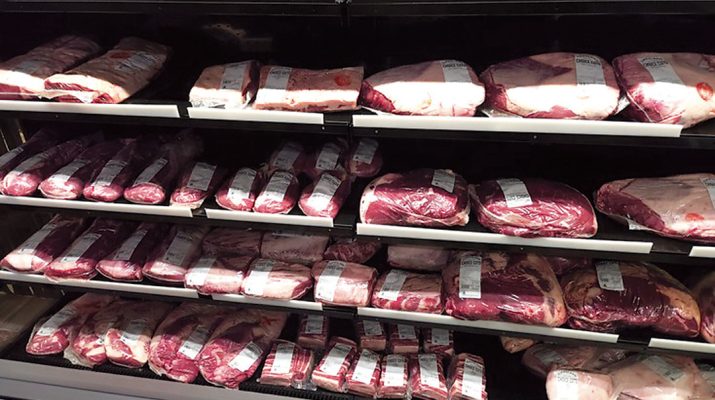
The agreement delivers only 30,600 tonnes cwt of beef access, far less than the minimum of 50,000 tonnes cwt needed to match EU terms for Australia’s competitors.
The outcome for sheepmeat and goatmeat is 25,000 tonnes cwt granted, far short of the 67,000 tonnes Australia sought.
In 2025, Australia imported 76,821 tonnes of EU dairy valued at more than $980 million, while exports to the EU totalled just 134 tonnes worth $29 million.
Shadow Minister for Agriculture Darren Chester has challenged the Agriculture Minister in Federal Parliament to endorse the agreement but she failed to say it was a ‘good deal’ for Australian farmers.
“Minister Julie Collins was given the chance to say whether it was a ‘good deal’ for Australian farmers and all we heard was waffle, spin and Labor Party talking points,” Mr Chester said.
“I’m not surprised because a long line of industry peak bodies have criticised the deal as ‘subpar’, ‘disingenuous’, ‘genuinely bewildering’, ‘unfair’ and a ‘one-way deal’ which has sold out farmers.
“It’s an extremely poor outcome for the overwhelming majority of Australian producers and the Labor Government should’ve walked away from a bad deal.
“Free trade agreements only work when they are genuinely trade-enhancing and deliver commercially meaningful market access for Australian producers who operate without the benefit of heavy subsidies.”
