
Katrina BRANDON
FIGHTING on the front lines, local fire brigades have put their hands up to send crew members to the bushfires, which are still causing havoc across the state.
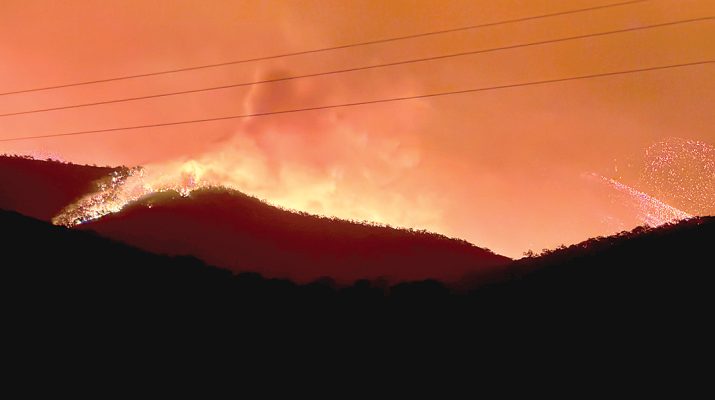
Morwell Fire Brigade’s 3rd Lieutenant, Bayley Charalambous, is one of many firefighters from District 27 (Latrobe Valley) to travel up to Tallangatta, where a bushfire is spreading across 106,543Ha (according to Vic Emergency), to help bring it under control.
Lieutenant Charalambous shared with the Gippsland Farmer the experience of “deployment” into the bushfire zones.
“We kind of figured that we’d be going somewhere at some point, but we just weren’t sure where,” he said.
Volunteering to work wherever they could, firefighters jumped in and were deployed by bus and some by units to the zones.
Working up in the mountains, the rugged terrain has made it hard to contain parts of the fire, and Lieutenant Charalambous said only 10 per cent had been marked as contained. With harsh terrain, he said that, ideally, firefighters would be working 12-hour shifts, but realistically, 16 hours.
“Realistically, you could be working up to 16 hours a day, depending on travel,” Lieutenant Charalambous said.
“It really just depends on the situation. Some days you could be working for 12 hours straight. Other days, you could be depending on what you’re actually doing, and what the task is: for that day, you could work four hours, take a break, then work another four, and so on and so on.
“We were given briefings and everything else before we left, but obviously it’s for our individual tasks.”
Tasks on site vary from state control to working up close to the fire. Lieutenant Charalambous explained that for those who weren’t up to getting close, they could take on tasks to update the others on the ground.
“The Incident Control Centre has an idea of what you need to do, and we’ve obviously got an idea of what we need to do as well, but you just don’t know the facts of what actually needs to happen,” he said.
“Fire is unpredictable, and the circumstances can change during the bus trip that it takes us to get there. So, our task when we leave here might be to go and do some blacking-out work on the edges of the fire. Conditions could change very rapidly, and we could find ourselves doing something completely different when we actually get there.”
Strike teams came from many parts of the state to help, with Gippsland-based teams part of the collaborative effort.
Back home, brigades continued to monitor the community and conditions.
“We all work pretty well together down here in our district, so it’s a matter of just helping each other out when we need to,” Lieutenant Charalambous said.
“Latrobe Valley’s got such a high risk because of its infrastructure, it’s something that we need to keep actively prepared for in the back of our minds. But if we, if we overextend ourselves by pushing, putting, putting every normal, we might not have enough coverage down here. So we only tend to send one strike team out at a time, and then we rotate through that way.”
With bushfires continuing to burn and conditions constantly changing, Lieutenant Charalambous urged people to keep listening to the advice and all community warnings, and to stay away from fire-affected areas so crews can continue to keep people safe while working to contain the fires.
