
Stefan BRADLEY
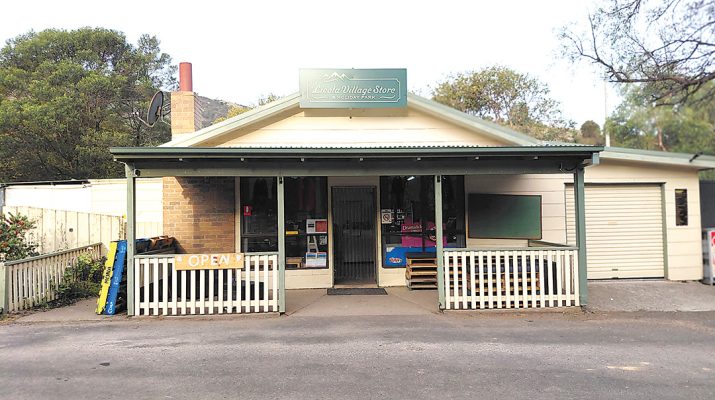
NEW name, new management, and new signage in Licola – despite an ongoing intention to sell the town.
The Licola General Store and Holiday Park have reopened under new management, with Licola Wilderness Village (also known as the Licola board, or just Licola) now operating both businesses from early February.
As part of the change, the former caravan park has been renamed the Licola Village Holiday Park, which the board says reflects a renewed focus on tourism and visitor experience in the region.
The Licola board said the transition ensured the continuation of critical services in one of Victoria’s most remote communities, providing fuel, supplies, and accommodation for travellers, campers, and locals.
“This isn’t just a business reopening – it’s about keeping Licola on the map,” a spokesperson said.
“Without these services, access to the area becomes significantly more difficult for visitors and the community alike.”
Licola is famously the only privately owned township in the state, owned by the Lions Clubs of Victoria and Southern New South Wales.
Since reopening, the General Store and Holiday Park have resumed daily operations, supporting a steady flow of visitors to the region. Plans are already underway to expand product offerings and improve facilities over time.
Located at the gateway to Victoria’s alpine country, Licola is a popular destination for campers, four-wheel drivers, and nature-based tourism.
The move also supports the broader long-term vision for Licola, ensuring the township remains accessible and viable while future plans for the area continue to evolve.
“This is about creating stability now, while building a sustainable future for Licola,” the spokesperson said.
Despite this, the town is still up for sale, with proceeds to be used for a dedicated Lions Licola Foundation to support children in need. The Gippsland Farmer asked the board if it still intended to sell despite the new management, coat of paint and an inability thus far to find a buyer.
All indications suggest a sale is very much on the cards, with the websites Commercial Real Estate (CRE) and Business Brokers Network showing listings for the Licola town. When the news about the sale of the town came out late last year, the town was listed on CRE for a $6 to $10 million acquisition. That listing was last updated on April 21 and now says “$1.9 million for freehold and business”. The Business Brokers Network listing has it for $5.2 million, also for freehold and business.
Licola Wilderness Village opened in 1973 after the town was purchased by the Lions Club of Victoria. It was established with a focus of providing camping experiences for disadvantaged children.
A Licola board spokesperson had previously said its responsibility was to “protect the mission, not just the physical place”.
The board is recommending the sale of all Licola properties, including the Licola Wilderness Village, general store and caravan park, with proceeds to be invested into the new Lions Licola Foundation.
Lions Village Licola Inc will continue as an incorporated association and retain control of the foundation and its invested funds.
The board said that by law, proceeds from the sale could not be distributed to Lions clubs or members and must be directed to an organisation with similar charitable purposes, which was why the foundation model has been chosen.
Before February this year, Licola Caravan Park and General Store was operated by Leanne O’Donnell since 2022, who moved to the area to run the business, which she purchased, which would presumably include the use of the name ‘Licola General Store and Holiday Park’. Her lease was not renewed and the board did not buy her business, sparking a backlash across the region and beyond.
All the signage, including the iconic sign on the front, was donated to the Heyfield and District Museum.
